
Emergency Assessment Unit
This leaflet is for the parent/carer of a child who has been assessed by a doctor or nurse practitioner after a viral induced wheeze episode. Your child has been assessed and is well enough to go home.
A wheeze is a high-pitched whistling sound that can be heard during breathing. It can be associated with increased difficulty in breathing. Breathlessness and wheezing can occur with a respiratory viral illness such as a common cold.
The wheezing episodes can last for two to four days but sometimes longer. Between colds, children do not usually have a wheeze even when exercising.
As soon as your child becomes wheezy or short of breath, they need to use their reliever inhaler. This is the blue salbutamol inhaler that you have been given. This reliever relaxes the muscle surrounding the airway, making it easier to breathe.
All inhalers must be given using a spacer as this is the most effective way of giving the medication (see figures 1a and 1b). A spacer is a plastic device that helps the medicine get into the lungs where it is needed. When used correctly, inhalers are just as effective as the nebulised solution that the hospital may have used.
The nurses will have shown you how to use a spacer. Please ask if you have any more questions about using the device before you go home.
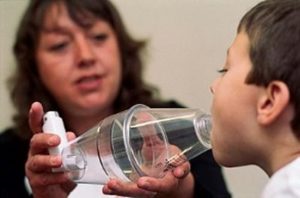
Figure 1a shows a spacer being used
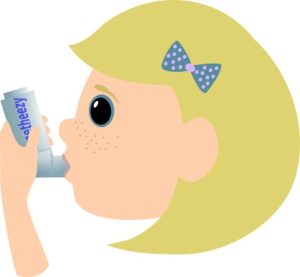
Figure 1b shows an inhaler being used without a spacer
When using the spacer device with an inhaler, please remember to get a good seal around the mouth area and count to 10 breaths before administering a further puff. This ensures that your child breathes in all the salbutamol medicine.
Reliever (blue) salbutamol with spacer. Use as follows:
Children breathe faster than an adult but it is important to look for signs that your child is struggling to breathe. Children use accessory muscles to breathe when they are struggling. You may notice:
These are all signs of distress so if you notice these, you should give your child 10 rescue puffs using the inhaler with the spacer device, and seek medical advice from your GP or NHS 111. In an emergency, visit your nearest Emergency Department (A&E).
x Do not allow them to return to school or nursery until you feel they have completely recovered.
Please arrange a GP appointment for your child within 48 hours of leaving hospital for a follow-up. However, if you feel there is no improvement and your child’s symptoms are getting worse, seek further medical advice immediately from your GP,
NHS 111 or your nearest Emergency Department (A&E).
If you have any questions, or if there is anything you do not understand about this leaflet, please speak to one of our nurses. If you need help when you return home, please contact your GP.
If you have any feedback on this patient information leaflet, please email dgft.patient.information@nhs.net
This leaflet can be made available in large print, audio version and in other languages, please call 0800 073 0510.
Originator: Joanne Taylor Date reviewed: September 2025 Next review due: September 2028 Version: 2 DGH ref: DGH/PIL/01400