
Ophthalmology
Blepharitis is inflammation of the eyelid margins. There are several different types of blepharitis, but when combined with blockage of eyelid glands, it can cause a chalazion as explained below. These glands open onto the edges of the lids and produce an oil, which is an important component of the tears. This oil can become thicker in blepharitis and the glands can therefore get blocked.
You can help relieve the irritation by using some or all of the measures outlined in this information leaflet.
The treatment described will help to control your condition. It is not a cure. It can take a number of weeks before treatment starts to be effective. Perseverance is essential.
A chalazion is a lump in the eyelid caused by a blocked meibomian gland, which typically occurs in patients with blepharitis (see below). Though treatment can include surgical drainage of the chalazion (called an ‘incision and curettage’), if it has been present for a long time, is painful or limits vision and has not responded to other treatments (as described below) the chalazion will normally get better on its own over time and will usually do so quicker if managed as below. Surgical treatment of a chalazion does not cure the underlying tendency to form more lumps over time, so it’s generally not an effective long-term treatment for most cases.
Treatment
Hot compresses
Hold a clean flannel / cotton wool soaked in comfortably hot water against the closed eyelids for five minutes. You will need to reheat the flannel in hot water, as necessary, when it cools. This melts the oils in the blocked glands. Never share flannels with others.
The alternative to hot compresses, often recommended in the eye clinic, is to use a device to heat the lids for longer than is achievable with a compress (microwaveable blepharitis masks). One such device is called a Meibopatch, which comes with a temperature strip on the box to check it is at the correct temperature (especially useful for children), but it is ideally kept on the eyes for six minutes, twice a day, so this requires some patience. Other examples of such devices are Optase and EyeBag. There are also moist heat USB plug-in devices which some may prefer. There are other brands and devices, all of which will be effective when used following their enclosed recommendations. They are available through chemists, opticians, directly or via the internet.
Lid massage following warming
Using a finger, firmly stroke the skin of the lids towards the lashes, e.g. downwards for the top lid and upwards for the bottom lid, or roll a pencil or similar object towards the lid margin.
Massage (as above) the whole width of the eyelids. This helps unblock the meibomian glands and expresses the oils.
Cleaning
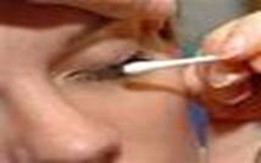
Clean away any crusts that are present on the eyelids, particularly around the roots of the lashes, using fresh cotton buds dipped in cooled boiled water or diluted Bicarbonate of Soda. Dilute a quarter teaspoon of Bicarbonate of Soda with half a cup of freshly cooled and boiled water. Prepare a fresh solution each day. If this is not suitable for you, there are also commercially available lid wipes, foams and solutions which are effective and are easy to use. You may be asked to use very dilute baby (non-tearing) shampoo instead.
The same precautions apply:
Antibiotic tablets / syrup (e.g. Doxycycline, Erythromycin)
These are frequently prescribed to reduce bacterial overload and to also reduce inflammation. They have effects on the thickened oil gland secretions which are commonly associated with blepharitis. Your doctor may ask you to take these for a number of months as they take time to work effectively. Please discuss any history of allergies with your doctor.
For children, a typical drug used is Erythromycin, usually 250mg twice daily for a month, and then once daily for a month (the dose is halved to 125mg in very small children). For adults who are not pregnant or who would not consider becoming pregnant in the near future, a drug such as Doxycycline 100mg once daily for a month, and then 50mg daily for up to three further months is a typical effective treatment.
These antibiotics can be seen as a way of controlling the blepharitis in the medium term – but use of a microwaveable blepharitis mask / compresses / lid hygiene will usually be needed in the longer term.
Omega 3 fatty acids
For adults with blepharitis, it may be helpful to take such supplements. If effective, results will be apparent after about three months. Flax seed oil is a vegetarian source. Most derive from fish oils, and oily fish in the diet may be helpful. These are food supplements and cannot be prescribed.
Lubricants
Where patients have dry eye symptoms, artificial tears can be helpful in some circumstances. Many drops are available, but some may work better than others and may be better in some blepharitis patients.
Currently, Systane Balance and Optive Plus are part of the formulary, and may be helpful in the oil imbalance in the tears. Other drops may be equally effective, and some trials of multiple preparations may be required to find what suits the individual.
If there is anything you do not understand, or you are concerned or worried about any part of the treatment, please contact The Urgent Referral Clinic team.
The Urgent Referral Clinic team at Russells Hall Hospital Eye Clinic: 01384 456111 ext. 3633 (9am to 4.30pm, Monday to Friday) on 01384 456111 ext. 3633 (9am to 4.30pm, Monday to Friday)
Eye emergency, out of hours
In case of an eye emergency after the closing hours of the Eye Clinic (including weekends and bank holidays), please contact the eye doctor on call by ringing the switchboard at:
Birmingham and Midland Eye Centre on 0121 507 4440
The doctor on call is usually based at the Eye Centre, City Hospital, Dudley Road, Birmingham. They may need to call you back, and if necessary, they will arrange for you to visit them.
Note: The information in this booklet is provided for information only. The information found is not a substitute for professional medical advice or care by a qualified doctor or other health care professional. Always check with your doctor if you have any concerns about your condition or treatment. This is only indicative and general information for the procedure. Individual experiences may vary and all the points may not apply to all patients at all times. Please discuss your individual circumstances with your eye doctor.
Author: Mrs S Joseph (Ophthalmology Staff grade)
Updated: (03.2018) Mr J S Barry and Mr M Quinlan (consultant ophthalmologists)
If you have any questions, or if there is anything you do not understand, please contact the Russells Hall Hospital switchboard number on 01384 456111 and ask for the relevant department who issued this leaflet.
If you have any feedback on this patient information leaflet please email dgft.patient.information@nhs.net
This leaflet can be made available in large print, audio version and in other languages, please call 0800 073 0510.
Lid Hygiene/SJ/JB/MQ/ST/09 2024/v5 – review 06 2027 DGH/PIL/02034