New Respiratory Procedure Introduced at Dudley Group NHS Foundation Trust
Clinicians at Dudley Group NHS Foundation Trust have successfully completed the Trust’s first advanced lung tissue sampling procedures. This marks an important milestone in the development of the Trust’s respiratory services.
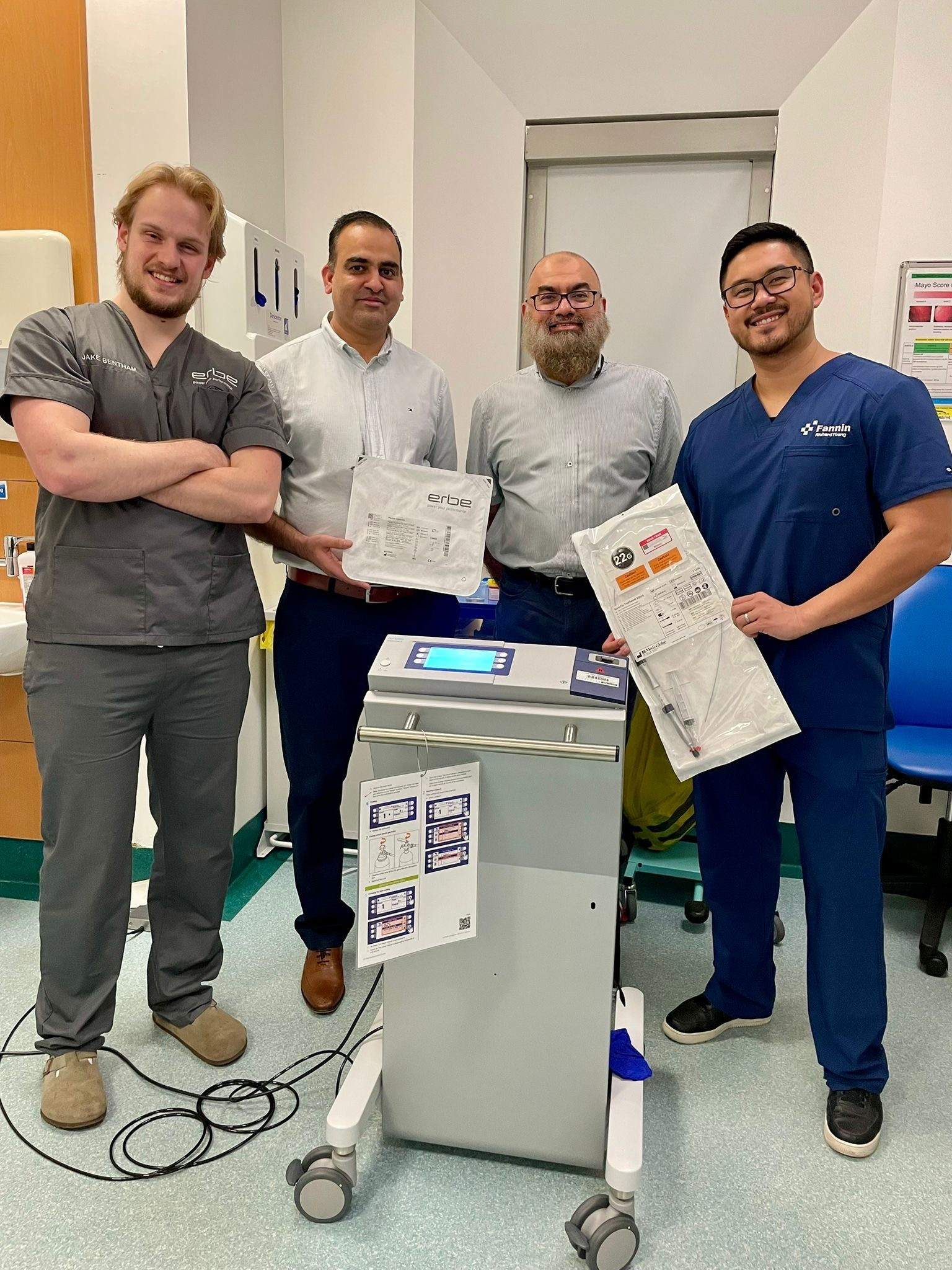
The procedures were carried out by Consultant Respiratory Physicians Dr Mazhar Chaudri and Dr Asif Azam as part of the CryoEBUS training program - a specialised course designed to help clinicians learn advanced techniques for obtaining lung and lymph node tissue samples safely and accurately.
CryoEBUS allows clinicians to take larger, higher-quality tissue samples while preserving tissue structure, improving diagnosis for patients with complex lung conditions. The course included practical instruction on using a small needle to locate the target tissue and guide the cryoprobe for biopsy, ensuring samples are taken safely and effectively.
“This procedure directly benefits our patients. By taking larger and more accurate tissue samples, we can provide faster, more reliable diagnoses and reduce the need for repeat procedures. It means patients receive the right treatment sooner and spend less time in hospital, which is a real step forward for care in our community,” said Dr Mazhar Chaudri.
The training program has been delivered locally following a series of initial CryoEBUS courses at the University Hospitals of Leicester NHS Trust, led by Dr Rakesh K Panchal and Dr Rajini Sudhir.
“Completing our first CryoEBUS procedures is a real milestone for the Dudley Group NHS Foundation Trust. The guidance from Leicester has been invaluable in helping us safely introduce this advanced technique,” said Dr Asif Azam.
The training was supported by Fannin UK and Erbe Group, using the Medi-Globe’s SonoTip® TopGain biopsy needles to ensure consistent, high-quality tissue sampling. This EBUS Transbronchial Needle Biopsy (TBNB) System plays a crucial role in enabling a smooth CryoEBUS procedure, allowing two sampling techniques to be incorporated into one streamlined approach.
The successful completion of these first cases highlights the value of strong clinical partnerships and the Trust’s commitment to delivering innovative, patient-focused care.