
Audiology
Auditory process disorder (APD) affects how the brain interprets sound, rather than how sound is carried through the ear to the brain. Children with this condition usually have normal hearing but have difficulty recognising sounds or understanding speech.
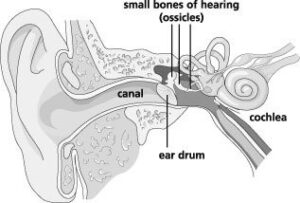
When someone has APD, sound enters the ear canal and passes through the middle and inner ear as usual. It then travels to the brain through the auditory nerve. Once the sound has arrived in the brain, there are problems with processing the sound, this can cause difficulty making sense of what they hear.
Each person is affected in a different way and to a different degree, so APD may be called a ‘spectrum disorder’. Some children have a greater range of difficulties than others.
Doctors do not really know what causes auditory processing disorder (APD), but research is ongoing to understand more about it.
There may be a genetic component to it, as parents sometimes report having had similar problems to their children when they were young. It may also be caused by the brain being ‘wired’ slightly differently in some children who had lots of ear infections in childhood so that message signals are passed from cell to cell less effectively than usual.
Other conditions can affect children alongside APD including dyslexia, attention deficit with or without hyperactivity disorder, poor attention, poor short-term memory, and speech/language problems.
It is not known how many children and young people are affected by APD but estimates from around the world suggest between three and five per cent of children have APD to some degree.
Parents may suspect that their child is not hearing or listening properly at quite a young age, but it is often at school that the difficulties become more obvious.
Children with APD are most likely to have difficulty in understanding speech especially in noisy environments, like a classroom or crowded shopping centre. They may also have trouble concentrating and reading when background noise is present. These problems may lead to difficulty in understanding and remembering instructions, speaking clearly and development of reading skills.
Teachers may be concerned when a child does not start reading at the usual age or is slow to pick up reading skills. However, these difficulties may be caused by other problems that affect communication.
When a child with APD has a common hearing test, they do not usually show any hearing impairment, as the test is carried out in a quiet room with minimal distractions.
Complex tests are needed to diagnose APD. Tests include hearing speech in different levels of background noise, pitch discrimination, sound pattern recognition and tests to determine the ability to detect subtle changes in sound. Results are compared with children of a similar age. APD testing is usually offered to children who have a developmental age of 7 years+.
More information on UK test centres can be found here:
https://apdsupportuk.yolasite.com/resources/APD TESTING CENTRES.pdf
There is no medicine or procedure that can ‘cure’ APD. However, there are several strategies that could reduce the effects of APD on everyday life. Training programmes to address specific issues or to improve listening and concentration can be very effective if practised regularly.
There are also some adjustments that can be made at school to make things easier, such as sitting near the front of the classroom, asking the teacher to check that your child is listening and back up verbal instructions with written ones.
For many children, APD improves as they grow older, usually because they incorporate coping strategies into their everyday life. With reasonable adjustments, most children and young people have a successful school and work life.
If you have any questions, or if there is anything you do not understand, please contact the Russells Hall Hospital switchboard number on 01384 456111 and ask for the relevant department who issued this leaflet. If you have any feedback on this patient information leaflet please email dgft.patient.information@nhs.net
This leaflet can be made available in large print, audio version and in other languages, please call 0800 073 0510.
Originator:.Karen Tromans, Audiology Service Date originated: July 2023 . Review date: August 2025 Next review due 01 August 2027. Version:1 DGH ref.: DGH/PIL/02184