
Cancer
As part of your chemotherapy regime, you will be receiving some of your chemotherapy at home, through an infusion device (pump). This leaflet gives you information on what a chemotherapy pump is, the benefits of it and how to look after the pump.
If you have any questions or concerns, please do not hesitate to contact a member of the C4 Georgina Day Case Unit.
Chemotherapy pumps are sometimes also called infusion pumps, elastomeric device or ambulatory infusions.
The pump is a small device that is used to give chemotherapy while you are at home. It is a non-electric medication pump that delivers treatment through clear plastic tubing into a central venous access device (‘Hickman’ or PICC line) at a slow and continuous infusion at a pre-planned infusion rate directly into your blood stream.
If you have your treatment through a chemotherapy pump, it means that you can go home and still safely receive your treatment, rather than having to stay in hospital for long periods of time.
It is important to check the small clamp on your central venous device, to make sure that it is in the ‘open’ position when your pump is attached (please see figure 1).
Figure 1
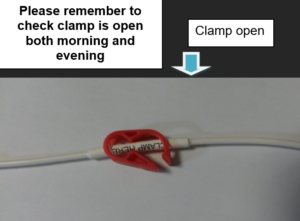
Figure 1 shows the clamp on a central venous access device.
The nurse will open the clamp for you when he/she connects the chemotherapy pump to your line, before you leave the chemotherapy unit. If when you get home, you notice that the clamp is closed, you should contact the C4 Triage helpline for advice:
01384 244028 (9am to 5pm, Monday to Friday)
or
01384 244235 or 01384 244251 (at all other times)
It is also important to you look at the balloon containing the chemotherapy twice a day to make sure that it is emptying (please see figure 2). If it does not appear to be emptying, contact the C4 Day Case Unit Triage helpline for advice:
01384 244028 (9am to 5pm, Monday to Friday)
or
01384 244235 or 01384 244251 (at all other times)
Figure 2
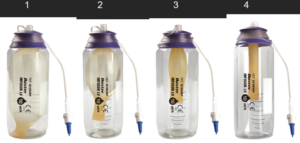
Image one shows the balloon full of chemotherapy
Images two and three shows the balloon is reducing
Image four shows the balloon empty.
(Images courtesy of Baxter Corporation © 2019)
It is safe to exercise with the chemotherapy pump as long as the chemotherapy medication remains close to room temperature and is not exposed to water.
The device is safe to use around pets or small children but ensure that it is protected from chewing and playing.
At night, it is important that you do not place the device on the floor or above your head as this can affect the flow. Placing the device on a bedside table, bedside drawer or on top of the bed covers will ensure it is at the correct height.
It is safe to have a bath or shower. However:
We will give you a home spillage kit when your treatment starts. There are instructions and equipment within the kit to help you to pick up the chemotherapy pump safely. This will allow you to return it to the chemotherapy unit for safe disposal.
It is essential that the pump is disconnected by a specially trained nurse.
Depending on your chemotherapy regime, the nurse who attaches your pump will advise you when to have your pump removed. This varies for each patient: some are 24-hour pumps, some are 46-hour pumps, and some are seven-day pumps.
You will be referred to the community IV team based at Brierley Hill Health and Social Care Centre, Venture Way, Brierley Hill, DY5 1RU. Pumps are removed between 4.30pm to 5.45pm, 365 days a year. Please call the community IV team on 01384 321241 for an appointment.
If you have any questions, or if there is anything you do not understand, please contact the Russells Hall Hospital switchboard number on 01384 456111 and ask for the relevant department who issued this leaflet. If you have any feedback on this patient information leaflet please email dgft.patient.information@nhs.net
This leaflet can be made available in large print, audio version and in other languages, please call 0800 073 0510.
Originator: Kate Owen and Karianne Palmer. Date originated: Nov 2023. Review date: August 2028. Version: 4. DGH ref: DGH/PIL/01194