
Ophthalmology
Cyclodiode laser treatment for glaucoma
Patient Information Leaflet
Introduction
This leaflet has been written to help you understand more about a type of laser treatment for glaucoma that has the medical name Cyclodiode laser treatment.
It explains what the treatment involves, the benefits and risks of it and what you should do afterwards. This information is designed to help you decide whether you would like this treatment, and to make you aware what to expect when you come to hospital.
What is glaucoma?
Glaucoma is an eye disease that can affect sight, usually due to a build-up of pressure within the eye. This eye pressure is known as intraocular pressure (IOP). If it is not treated or if treatment is delayed, it can cause blindness.
A fluid (called aqueous humour) is produced inside the eye. This fluid is needed to
- Provide nutrients to the front of the eye, especially the cornea and lens.
- Remove waste products from the eye.
The fluid drains mainly through a structure called the trabecular meshwork. This meshwork lies inside the eye in the angle where the cornea meets the iris. The normal pressure in the eye is between 10 and 21 millimetres of mercury (mmHg). If for any reason the fluid flow is blocked and cannot normally get out, the pressure can rise and glaucoma may occur.
What treatment options and alternatives are there?
There are various treatment options including tablets, eye drops, laser treatment and drainage surgery, which includes trabeculotomy, iStent, trabeculectomy and glaucoma tube surgery. Your consultant will discuss all the possible options with you and you can decide which option you prefer. Eye drops and laser trabeculoplasty are by far the most commonly used initial treatments.
You do not have to have treatment – it is ultimately your decision. However, if glaucoma is not treated, it may eventually cause blindness.
Please note that almost all glaucoma treatments and procedures, including laser treatments, are used to control / slow down glaucoma and not to improve your vision. Once vision is lost from glaucoma, you cannot get it back. All treatment for glaucoma is aimed at slowing down the rate of progression of glaucoma, to reduce the risk of complete blindness during your lifetime.
What is Cyclodiode laser treatment?
During the treatment, a laser is used to destroy some of the tissue in the eye that produces aqueous humour (known as the ciliary body). This tissue is behind the iris which is the coloured part of your eye. This reduces the amount of fluid produced, which means that the pressure in your eye will decrease (Please see figure 1 on the next page).
It is not a permanent treatment and may need to be repeated in the future to continue to control eye pressure effectively.
Figure 1 (continuous wave cyclodiode) –
The 1a image shows a G cyclodiode probe being used to deliver a laser to the ciliary body (fluid-producing tissue inside the eye).
The 1b image shows the laser spots of destroyed tissue on the eye.
The 1c image shows the laser spots of destroyed tissue on the ciliary body.
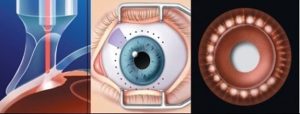
Figure 2 (Micropulse Cyclodiode)
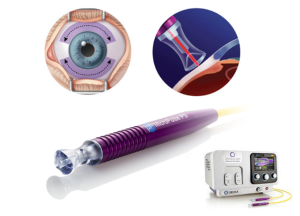
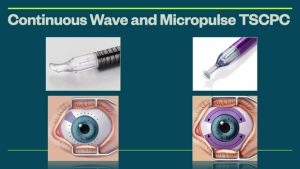
Figure 3 (Continuous wave & Micropulse Cyclodiode options)
Why is this treatment recommended?
It is often recommended as an option for patients who have glaucoma that is difficult to control with other treatment methods, or where other treatment methods are not suitable.
What are the benefits?
Cyclodiode laser treatment uses a diode laser, which is a highly concentrated beam of light, to target and treat a selected area inside the eye called the ciliary body. This leads to reduced production of aqueous humour (the watery fluid in the eye), and this leads to a fall in IOP.
How successful is it at lowering intraocular pressure (IOP)?
Studies show that there is a success rate of about 50-80 per cent for this type of laser treatment (about four out of every five patients).
The effects of the laser treatment can wear off in time, but sometimes may last for months or years. The treatment can be repeated if necessary, or other treatment may be offered.
What are the risks?
As with all forms of treatment, Cyclodiode laser treatment carries some risks and complications. It is important that we tell you about these risks so that you have the information you need to make a decision about it. The risks are:
- Your vision may be blurred for a few hours after the treatment. If you are concerned that your vision is not returning to normal, please contact the Urgent Referral Clinic. Due to this, you are also advised not to drive yourself to the hospital, as you may be unable to drive home.
- Reduced vision or a loss of sight, especially if the pressure in your eye goes very low after the treatment. This very low eye pressure occurs in about one in 20 treated eyes.
- Failure of the treatment or the need for further treatment or treatments.
- About one in five people may notice a change in their vision. There can be various reasons for this, such as inflammation in the eye and swelling in the retina. These may improve with treatment.
- Other complications may include eye pain, a bloodshot eye and bleeding.
What happens before the treatment?
Your eye doctor will tell you if you need to stop your usual eye drops before the treatment.
What happens during the treatment?
Cyclodiode laser treatment is usually carried out as a day case which means you will only need to be in hospital for the day (not overnight). The doctor will explain the treatment and discuss any concerns or questions you may have. If you are happy to proceed with the treatment, your previously signed consent will be confirmed.
The treatment is performed in an operating theatre. We will give you a local anaesthetic. This means that although you will be awake, your eye will be numb so you will not feel any pain. During the laser treatment, you might see some flashes of light and hear clicking noises.
How long does it take?
The treatment itself takes between 15 and 20 minutes; however, the whole visit might take up to half a day.
What happens after the treatment?
You may be given an eye pad or shield after the laser treatment, which you should leave on until you get home. We advise that you do not drive on the day of the treatment.
Your eye may be uncomfortable and you may have pain for a few days after the treatment. This can usually be controlled with painkillers, such as paracetamol (always read the label; do not exceed the recommended dose).
Your eye may also be watery and gritty for a few days, and your vision may be blurred. You may be given some new eye drops to use at first, to reduce inflammation and discomfort in your eye. It is important that you use these drops as directed.
Follow up
We will make an appointment for you to come back to the Eye Clinic, usually two to four weeks later. This follow-up appointment is to check your response to the laser treatment.
What should I look out for at home?
If you have any of the following after surgery:
- Reduced vision or loss of vision.
- Severe pain that does not go away.
- Redness of the eye that does not go away.
- Any abnormal discharge from your eye, especially if it is increasing.
Please contact the Urgent Referral Clinic team at Russells Hall Hospital Eye Clinic on 01384 456111 ext. 3633.
Can I find out more?
You can find more information on glaucoma, the risk of blindness from glaucoma and various treatment options from the following websites:
http://www.nhs.uk/Conditions/Glaucoma/Pages/Treatment.aspx
http://www.glaucoma-association.com/
http://www.glaucoma-association.com/about-glaucoma/what-is-glaucoma
http://www.nei.nih.gov/health/glaucoma/glaucoma_facts.asp
http://www.rnib.org.uk/eyehealth/eyeconditions/eyeconditionsdn/Pages/glaucoma.aspx
https://eyewiki.aao.org/Micropulse_Transscleral_Cyclophotocoagulation
http://en.wikipedia.org/wiki/Glaucoma
http://www.nice.org.uk/guidance/cg85/ifp/chapter/About-this-information
https://www.rcophth.ac.uk/patients/glaucoma/
What if I have any problems or questions after reading this leaflet?
If there is anything you do not understand, or you are concerned or worried about any part of the treatment, contact:
The Urgent Referral Clinic team at Russells Hall Hospital Eye Clinic on 01384 456111 ext. 3633 (9am to 4.30pm, Monday to Friday).
Eye emergency, out of hours
In case of an eye emergency after the closing hours of the Eye Clinic at Russells Hall Hospital (including weekends and bank holidays), please contact:
Birmingham and Midland Eye Centre on 0121 507 4440
The doctor on call is usually based at the Eye Centre, City Hospital, Dudley Road, Birmingham. They may need to call you back, and if necessary, they will arrange for you to visit them.
Note: the information in this booklet is provided for information only. The information found is not a substitute for professional medical advice or care by a qualified doctor or other health care professional. Always check with your doctor if you have any concerns about your condition or treatment. This is only indicative and general information for the procedure.
Individual experiences may vary and all the points may not apply to all patients at all times. Please discuss your individual circumstances with your eye doctor.
Author:
Mr Akash Raj, MD, MRCS, DRCOphth, FRCS, FRCOphth, Consultant ophthalmologist (glaucoma lead)
References:
Alexander T Nguyen, Jessica Maslin, Robert J Noecker. Early results of micropulse transscleral cyclophotocoagulation for the treatment of glaucoma. Eur J Ophthalmol. 2020 Jul;30(4):700-705.
https://www.nice.org.uk/guidance/ipg692/chapter/3-Committee-considerations
Samia-Aly E and Shahid H. The Effectiveness of Trans-scleral Cyclodiode Treatment. European Ophthalmic Review 7(1):17–9 DOI: 10.17925.
Zhekov I, Janjua R, Shahid H, Sarkies N, Martin KR and White AJ (2013). A retrospective analysis of long-term outcomes following a single episode of transscleral cyclodiode laser treatment in patients with glaucoma. BMJ Open. 3(7). pii: e002793.
If you have any questions, or if there is anything you do not understand, please contact the Russells Hall Hospital switchboard number on 01384 456111 and ask for the relevant department who issued this leaflet.
If you have any feedback on this patient information leaflet please email dgft.patient.information@nhs.net
This leaflet can be made available in large print, audio version and in other languages, please call 0800 073 0510.
Cyclo/AR/ST/DP/09 2024/v4 – review 06 2027 DGH/PIL/01153