
The way we use patient data is changing: We aim to provide the highest quality care. To do this, we routinely collect information about you and the care you receive from us. Like other hospitals across England, we are changing how we share and use this data… Find out more

The Dudley Group NHS Foundation Trust Logo
Homepage|Services|Accident & Emergency Department
Flowers digital art

Accident & Emergency Department (A&E)

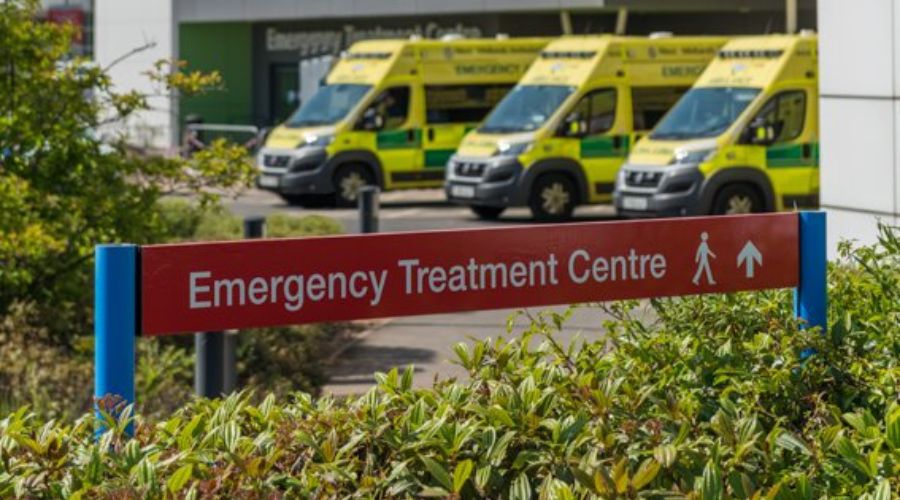
Suing post of Emergency Treatment Centre with ambulances in background

- Russells Hall Hospital Emergency Department

The Accident and Emergency Department (A&E) assesses and treats people with serious injuries and those in need of emergency treatment. We provide immediate care for people of all age groups.

Russells Hall Hospital has a 24-hour emergency department. It deals with all emergency injuries and illnesses and trauma for children and adults.

As well as treating and assessing all types of serious illness and injury including medical, surgical and trauma requirements, immediate X-ray, scans and blood supplies are available. Doctors within the department are trained to the highest standards.

The department also offers early assessment and treatment for strokes, with the ability to stabilise, resuscitate and treat extremely ill or injured patients. Priority is given to stroke and heart attack patients, along with young children. We use triage – a way of classifying cases in order of seriousness – to direct patients to the right treatment for the fastest possible service.

Flowers digital art

Alternatives to A&E

There are a number of ways to access medical help. Please only visit our A&E departments if your condition is serious or life threatening.

Most GP practices are offering weekend access. To find out if your practice is participating in this scheme please call the usual practice phone number and listen to the full instructions.

Alternatively, you can check your practice’s opening times via https://www.nhs.uk/Service-Search/GP/LocationSearch/4

This service is available 24 hours a day, seven days a week. Patients can get medical advice, self-care support, prescriptions and in some cases book appointments. Go to https://111.nhs.uk/(opens in a new tab)

Patients can also download the Ask NHS App.

Flowers digital art

Pharmacies

There are a number of late night pharmacies opening in the vicinity of Russells Hall Hospital.

Advice from a pharmacist:

Pharmacists can offer advice on a range of illnesses, such as coughs, colds, sore throats, ear infections and aches and pains.

They can also give advice about medicines. This includes how to use your medicine, worries about side effects or any other questions you have.

If they cannot help you themselves, they can refer you to a GP or other health professional.

Treatment from a pharmacist:

Pharmacists can suggest treatments that do not need a prescription for a range of conditions.

Most pharmacies can also offer prescription medicine for some conditions, without you needing to see a GP or make an appointment. This is called Pharmacy First.

Conditions they can offer prescription medicine for are:

  • impetigo (aged 1 year and over)
  • infected insect bites (aged 1 year and over)
  • earache (aged 1 to 17 years)
  • sore throat (aged 5 years and over)
  • sinusitis (aged 12 years and over)
  • urinary tract infections (UTIs) (women aged 16 to 64 years)
  • shingles (aged 18 years and over)

If you are not within these age ranges, a pharmacist can still offer advice and support decisions about self care treatment with over the counter medicines, but you may need to see a GP for treatment.

If you go to a pharmacy with one of these conditions, the pharmacist will offer you advice, treatment or refer you to a GP or other health professional if needed. They will also update your GP health record, but your information will not be shared with anyone else.

Most pharmacies can provide prescription medicine for these conditions but contact them before visiting to check.

Find your nearest Pharmacy here.